
To enable the cost-effective commercialization of hydrogen technology, the project involved the development of concepts for a unique, convertible production line (DuoLine) that can initially meet the demand for electrolyzers based on PEM stacks and later also produce PEM stacks for fuel cells. The Fraunhofer IWU successfully implemented passive high-pressure sheet metal forming for the first time at forming pressures exceeding 200 MPa to produce complex bipolar plate geometries.
In general, in high-pressure sheet metal forming, the high pressure in the working fluid is generated by a hydraulic pressure intensifier and fed through a corresponding high-pressure line into the tool component that carries the working fluid. This configuration requires a hydraulic press with an external water-based hydraulic system, including a pressure intensifier, as well as a control and regulation system that controls the pressure based on the clamping force or the clamping force based on the pressure.
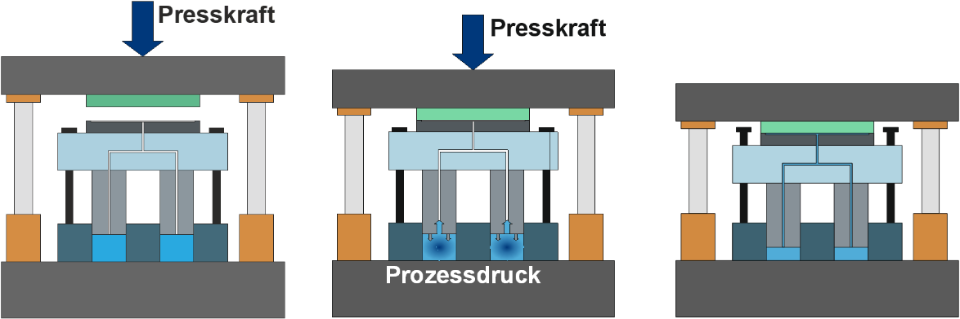
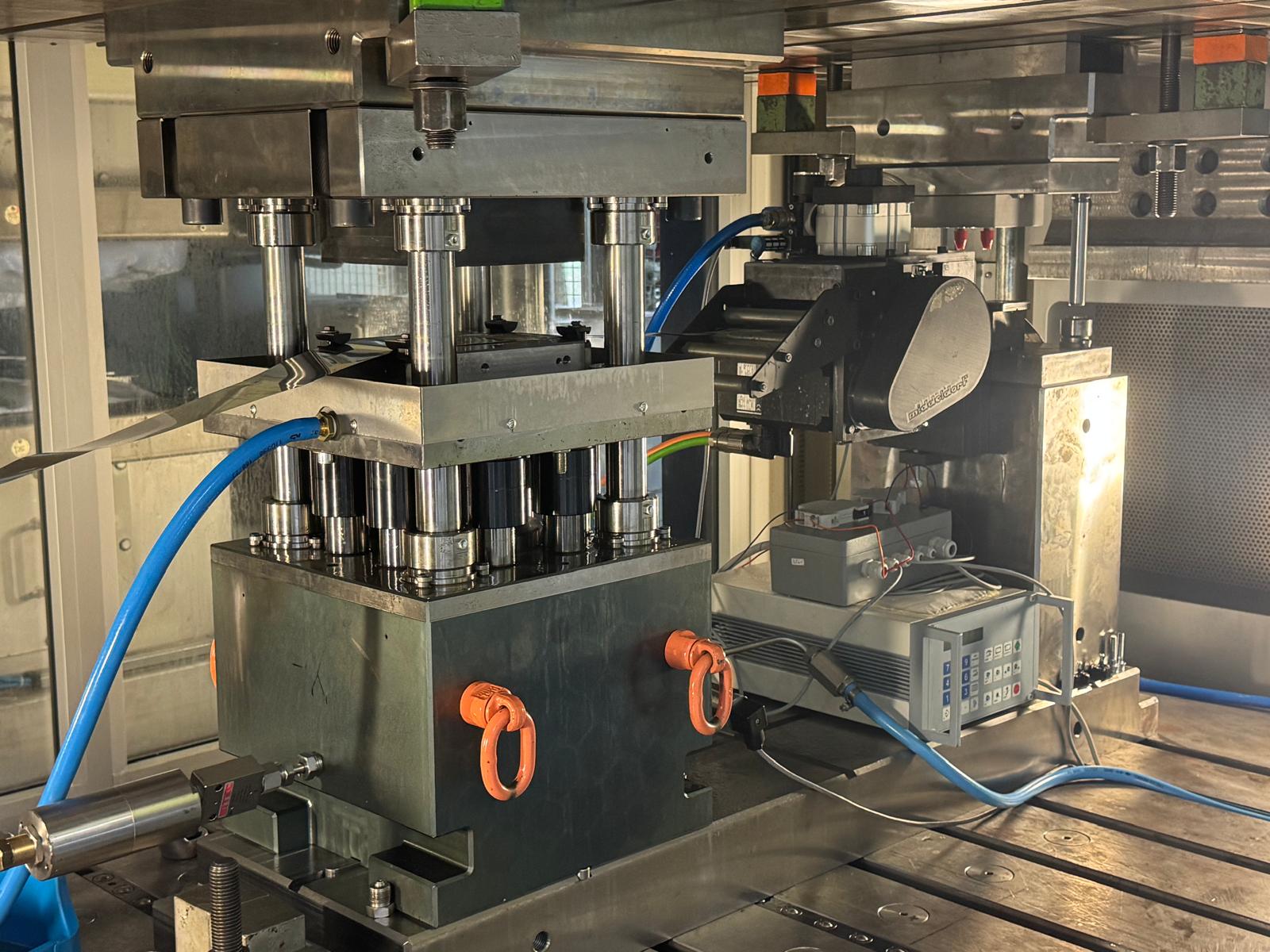
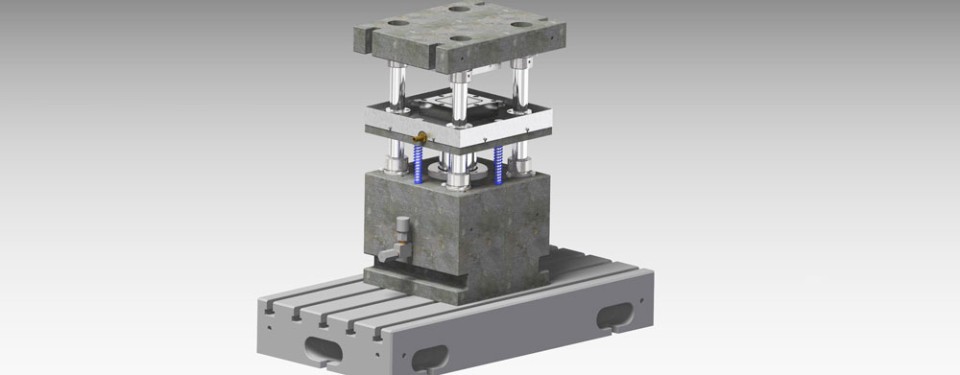
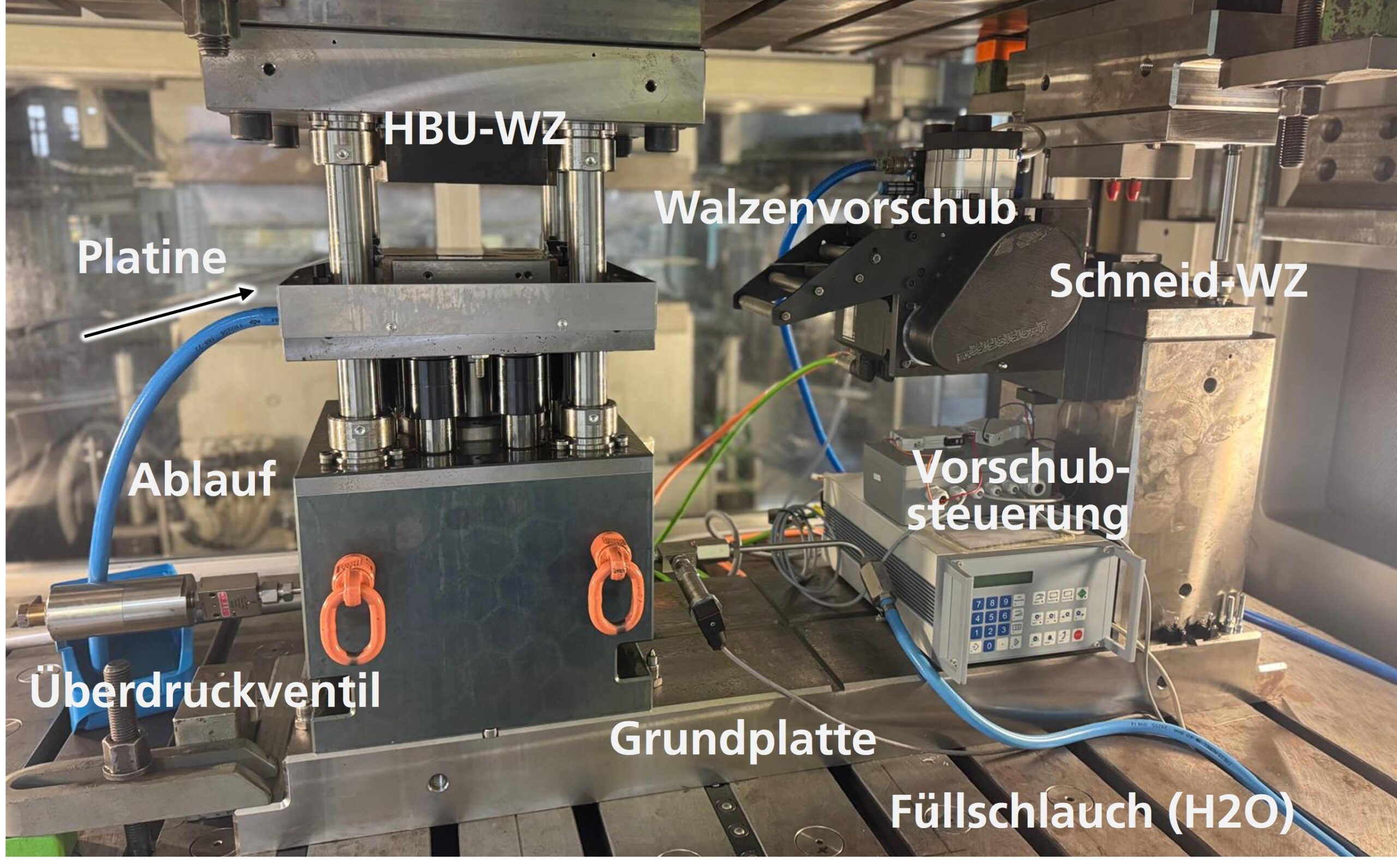
In passive hydroforming, the pressure intensifier is integrated directly into the forming die and thus into the force path of the press. When the press closes, the forming die closes first, and the pressure required for forming is generated during the subsequent stroke. This allows the process to be implemented on a wide variety of presses. Since no external pressure intensifier is required, cycle times can be significantly shorter than in conventional high-pressure sheet metal forming.