Making hydrogen systems economical | Hannover Messe 2025
From component to self-sufficient energy solution: the Referenzfabrik.H2 in Hall 13 at Hannover Messe 2025.
From component to self-sufficient energy solution
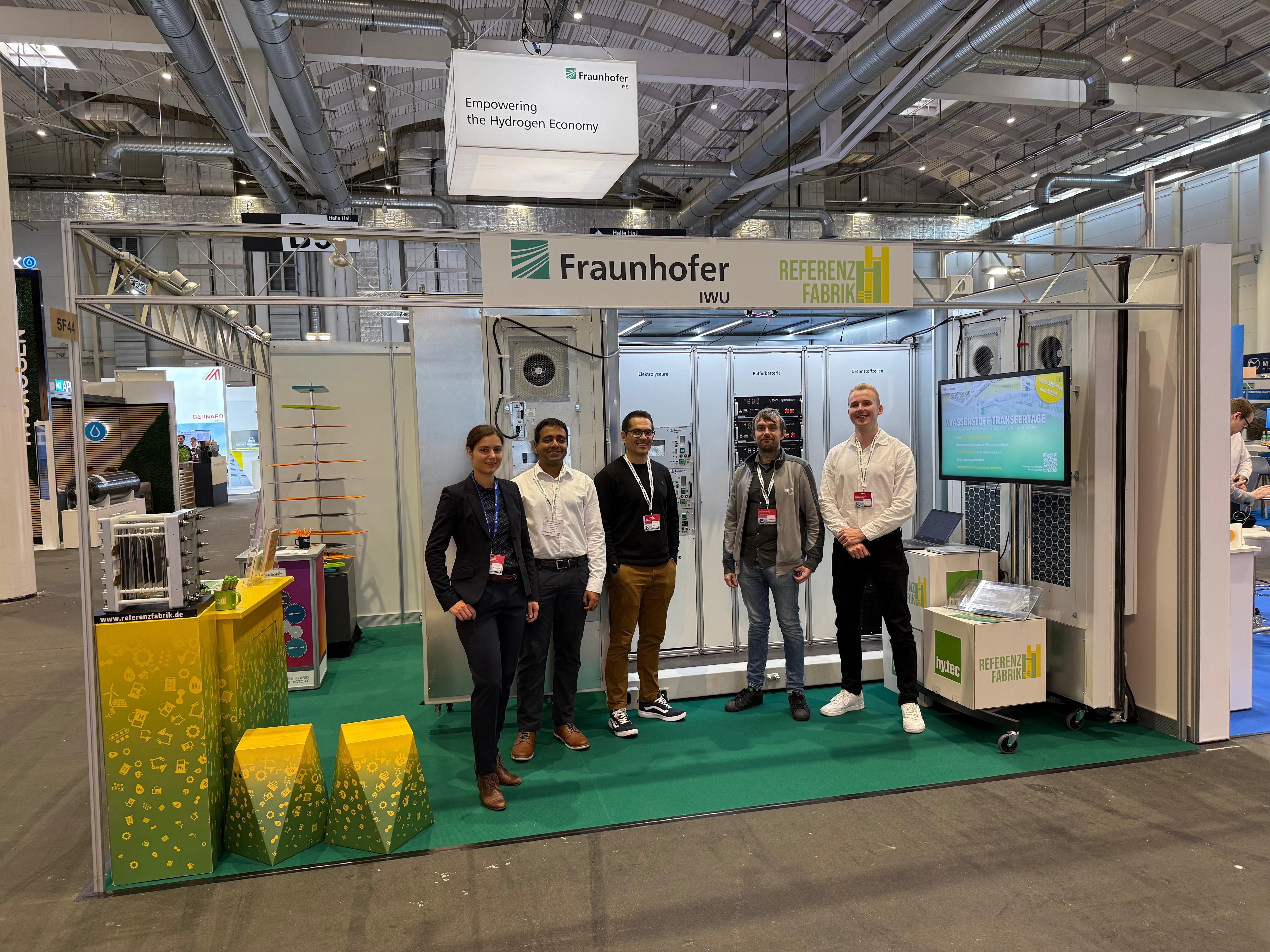
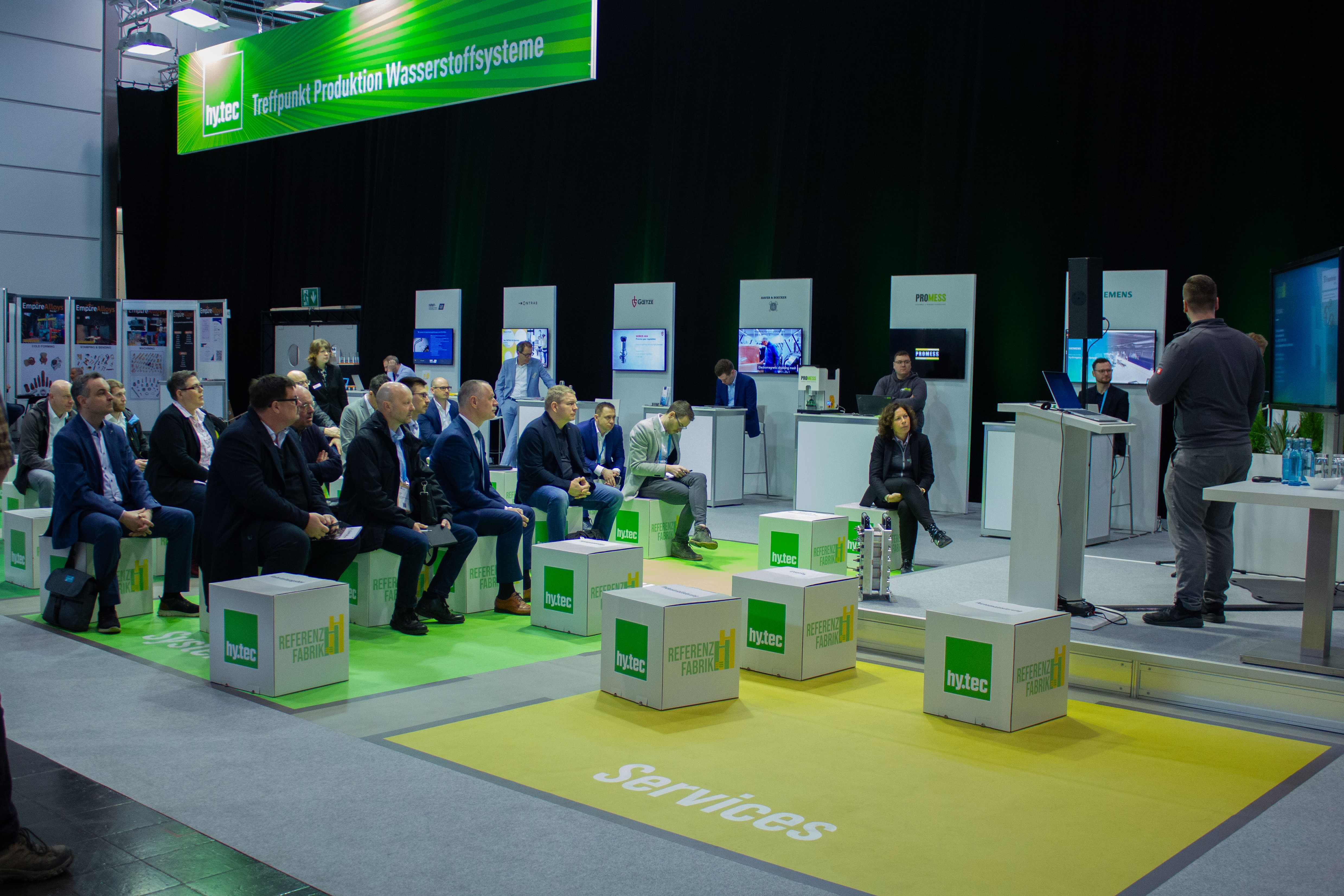
Hall 13 at Hannover Messe 2025: a showcase for hydrogen-based future technologies in which leading players in the industry once again presented their ideas and solutions this year. Fraunhofer IWU was there with the Referenzfabrik.H2 — as a value-creation community for hydrogen systems. An opportunity to start new projects with partners, seal collaborations or polish the image of hydrogen.
Many inquisitive people who wanted to inform themselves about the current state of hydrogen use came to our exhibition booth and sought answers to their questions. Statements such as “But the efficiency is only 50%.” or “Hydrogen is dangerous to use.” were not uncommon. Reaching the lower explosion limit of 4% for hydrogen sounds simple — until you consider that hydrogen diffuses through almost all materials. Rather like trying to nail pudding to the wall: barely there, already gone again.
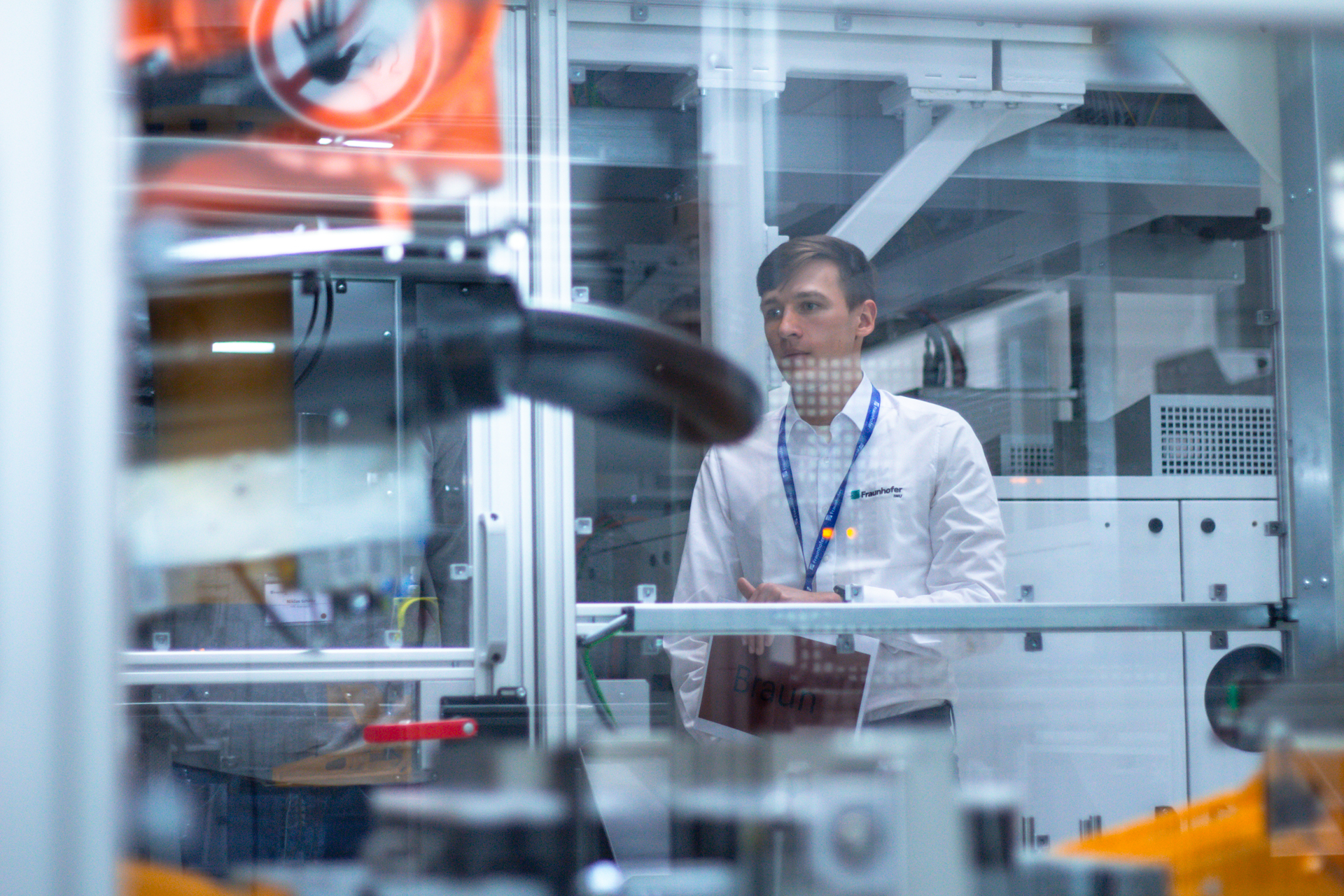
Making hydrogen economical — that was also a consensus at Hannover Messe. And this begins with the economically efficient production of electrolyser and fuel cell as well as their individual components. This requires, among other things, more efficient production technologies, which Fraunhofer IWU develops together with various industry partners. For example, roll forming is used as a high-rate process to form bipolar plates. By using more efficient technologies, the Referenzfabrik.H2 has managed to reduce production costs for the HyVentus electrolyser stack by 50% compared to conventional production technologies.
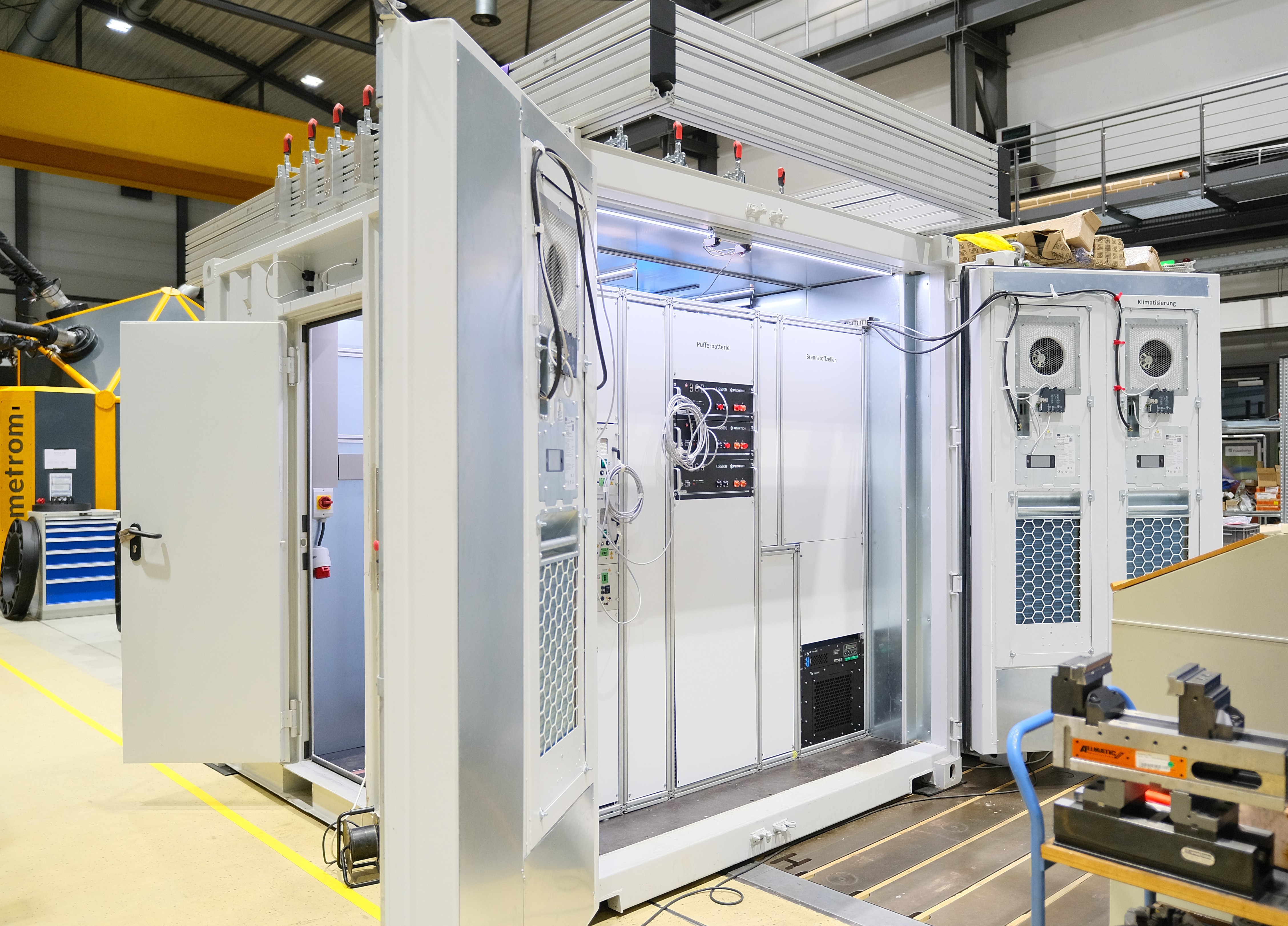
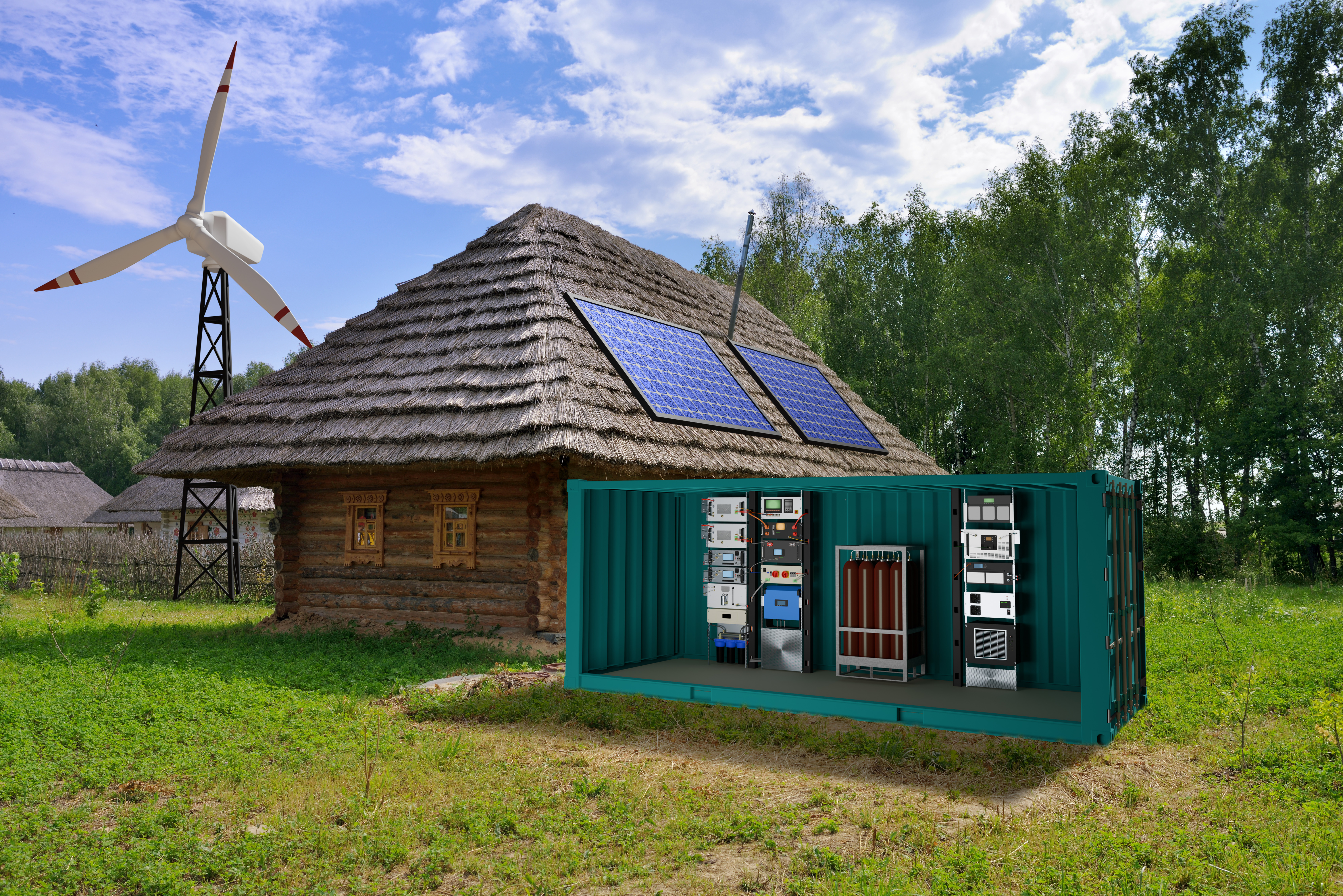
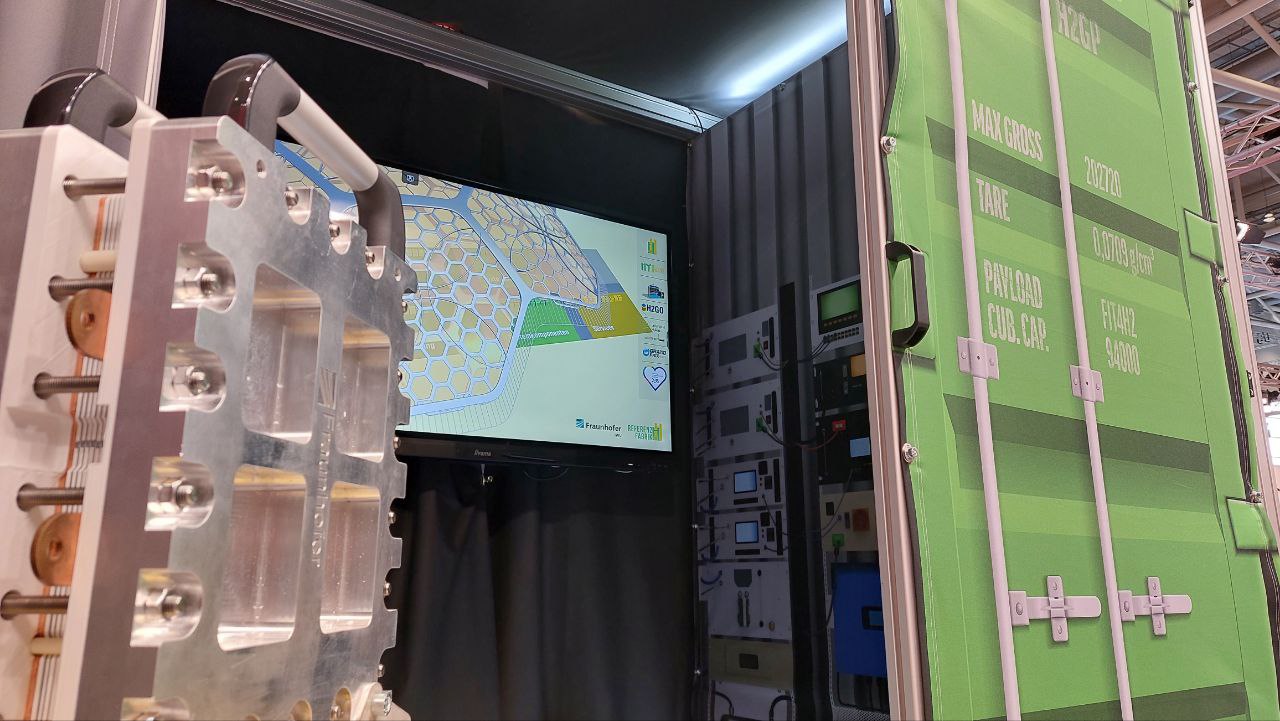
From component to self-sufficient energy solution: here, visitors could experience live how sustainable energy supply already works on a small scale today. Our microgrid — a shipping container equipped with modern system technology — attracted many interested looks. Inside the container we demonstrated a self-sufficient energy system that efficiently stores renewable energy and makes it usable. An electrolyser converts surplus electricity, e.g. from photovoltaics, into hydrogen. This is stored in high-pressure tanks and converted back into electricity in a fuel cell when needed. In this way, energy that would otherwise dissipate unused is conserved and made flexibly available — a real building block for the energy transition!
The consistently positive feedback and the exciting conversations on site show us: the combination of innovative technology and concrete application inspires. We thank all visitors for the great interest and the positive response!